Subtitling Services, Professional Subtitling, and Audiovisual Translation
Subtitling Services, Professional Subtitling, and Audiovisual Translation
Subtitling Agency
If you are looking for an agency specialising in subtitling, Dotwords is the company for you.
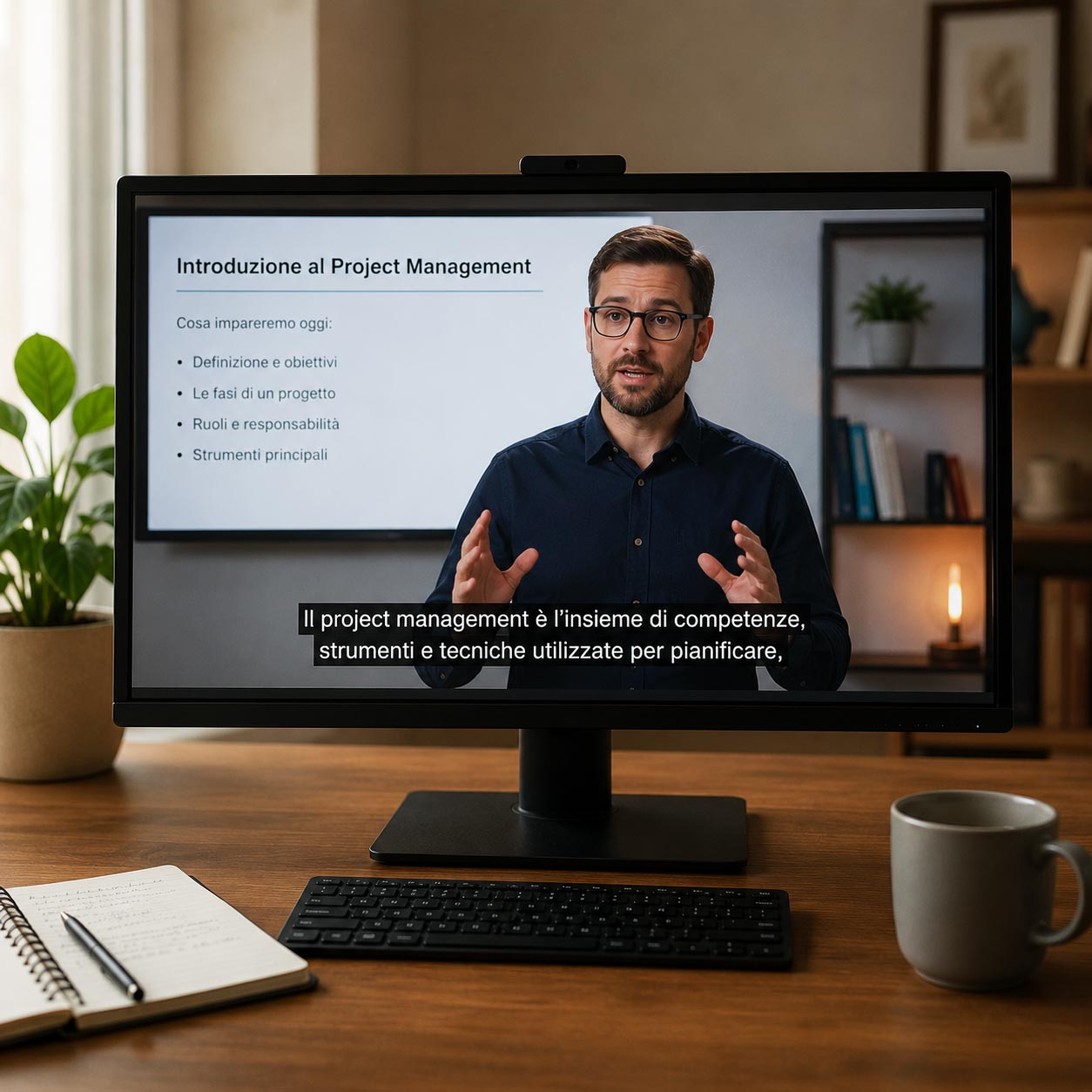
There are many areas in which professional subtitling services are required. Whether it is films, corporate videos, e-learning courses, or web content, each format has its own rules for text synchronisation, segmentation, and adaptation.
At Dotwords, we manage the entire subtitling process, from audiovisual translation to delivery of the file in the required format, with native speakers and dedicated professional software.
What is subtitling?
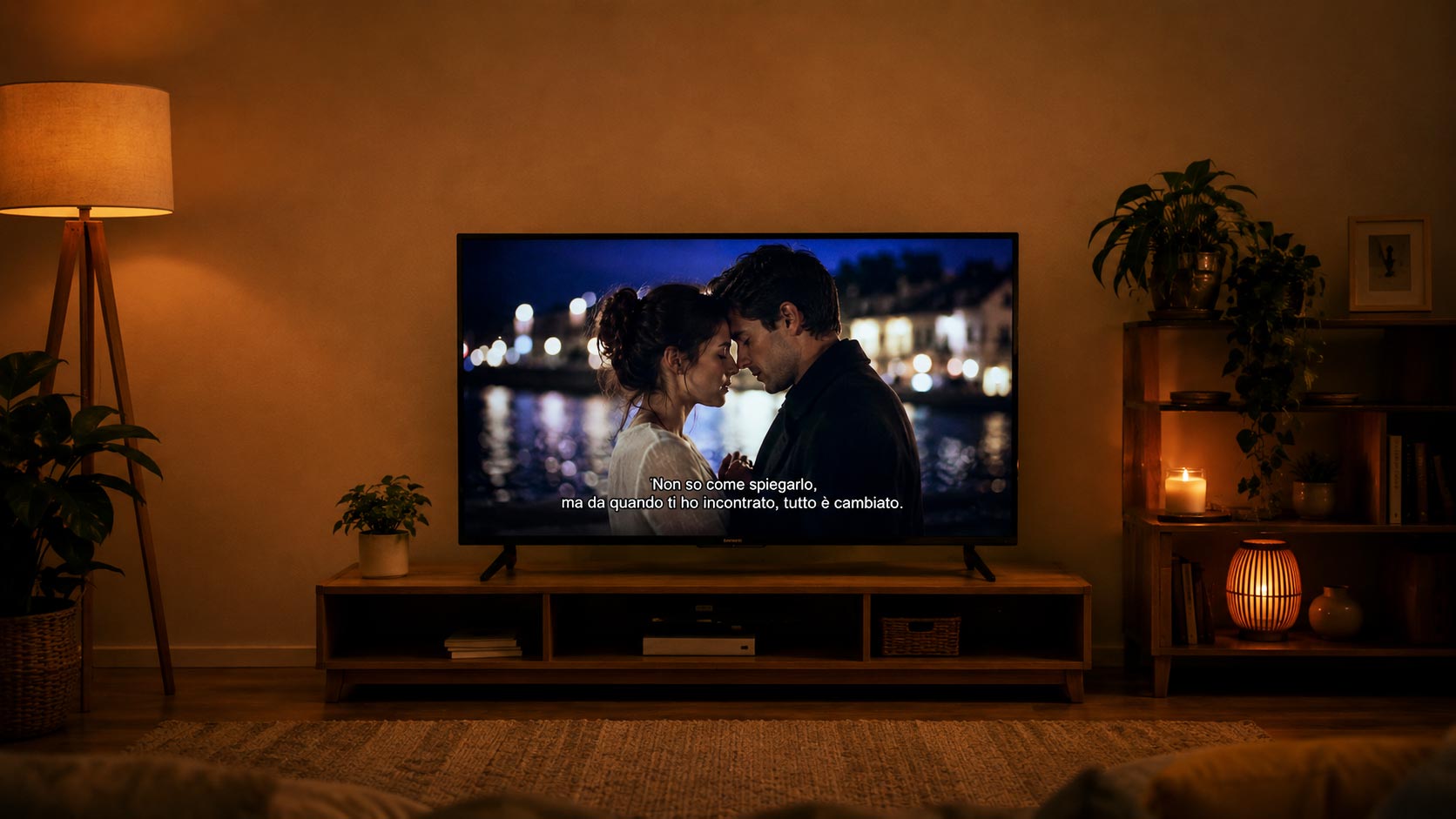
Subtitling is an audiovisual translation technique for the spoken content of videos that involves displaying written text on the screen to make the dialogue and sounds in the video content understandable in the original language or translated into another language.
The service is particularly in demand for film subtitling, TV series subtitles, advertising, training, and corporate purposes, as it allows content to reach a broader and more diverse audience. It also promotes inclusivity, enabling deaf or hard-of-hearing people to enjoy video content as well.
How we create subtitles
Professional subtitling services do not rely on automated tools: subtitle quality depends on the translator’s ability to adapt the text to the pace of the spoken content, while respecting display times, sentence segmentation, and consistency with the visuals. Automatic generation software produces systematic errors that can undermine the credibility of the content.
At Dotwords, we work with native-speaking translators specialised in audiovisual translation, who use professional software to create, synchronise, and format subtitles.
The final file is available in the most common formats (.srt, .vtt, and others), suitable for any distribution platform.

Why choose a professional subtitling agency
Among subtitling agencies in Italy, Dotwords stands out for its combination of expertise in specialised language services, professional technological tools, and accessibility.
Here are the areas where we make a difference.
Technology and formats
We use professional software dedicated to subtitling to create, edit, synchronise, and format subtitles according to the characteristics of each video.
The final file is available in all formats requested by the client (.srt, .vtt, and others), ready for upload to any platform.
Audiovisual translation
Subtitling is a specialised discipline taught at Schools of Interpreting and Translation.
Our professional translators have specialised training in audiovisual translation and are familiar with the technical rules governing synchronisation, segmentation, and text reduction, as well as the conventions specific to each genre and market.
Native-Speaking Translators
Subtitling is carried out by native-speaking translators with a solid knowledge of the target culture. This ensures that the adaptation is accurate not only linguistically, but also culturally and stylistically, meeting the expectations of the target audience.
Accessibility
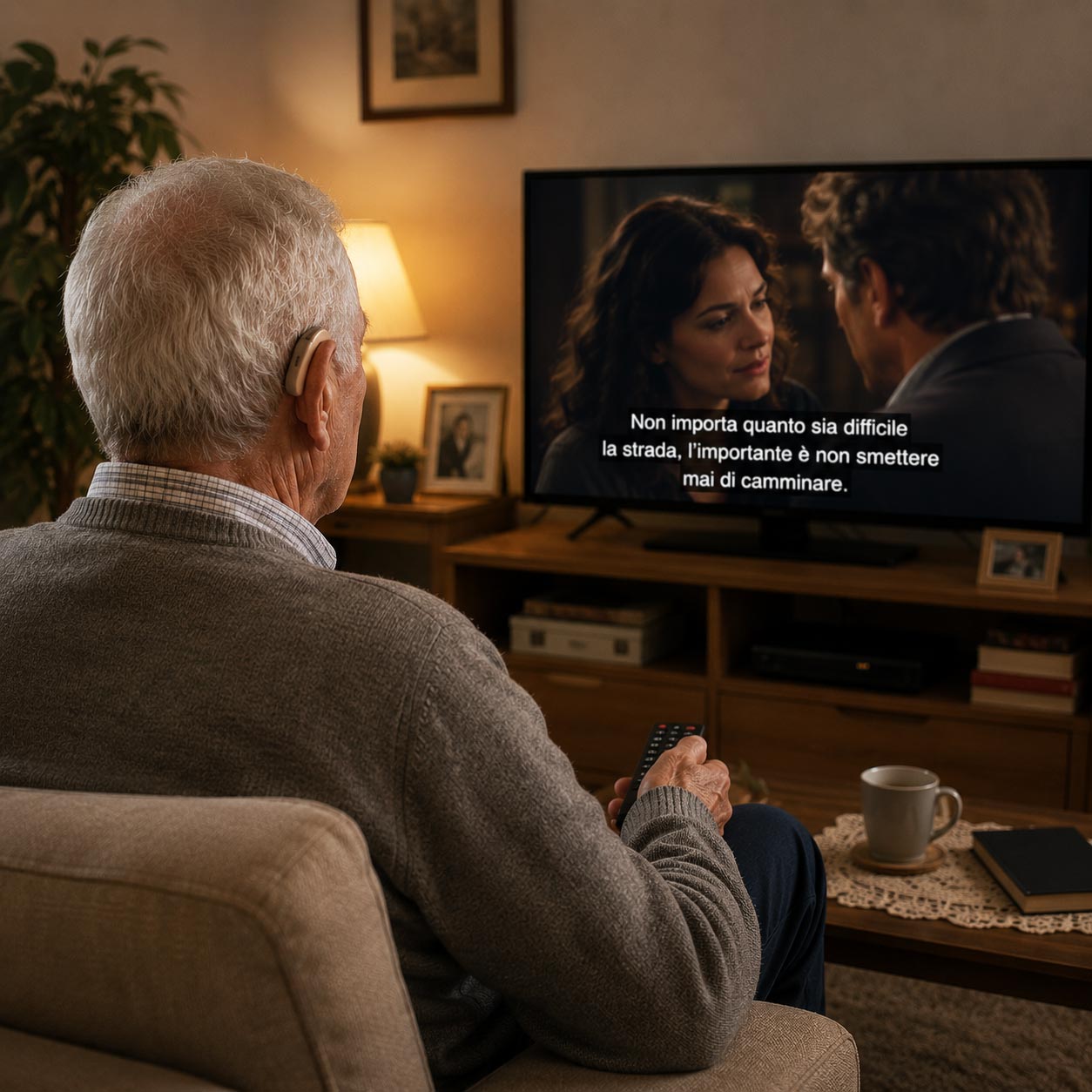
Subtitling for the deaf and hard of hearing must meet specific technical requirements, including subtitle length, punctuation, simplification, and specific conventions to make content fully accessible.
Dotwords collaborates with ENS Lombardia to ensure proper accessibility standards, such as accessible subtitles and LIS (Italian Sign Language), and to promote a positive image of deafness, break down stereotypes and prejudices, and change the paradigm surrounding disability in general and deafness in particular.
Accessible subtitling is highly useful not only for the deaf community, but also for people experiencing temporary hearing difficulties or hearing loss due to ageing.
Interlingual vs. Intralingual Subtitling: What’s the Difference?
Interlingual subtitling involves translation from one language into another: the original-language audio content is rendered in written form in the language of the target audience. It is the most commonly requested type for the international distribution of films, series, documentaries, and corporate videos.
Intralingual subtitling, on the other hand, takes place in the same language as the original content: this includes subtitles for people who are deaf and hard of hearing, as well as karaoke subtitles, educational subtitles, or transcriptions of content in noisy environments.
Both types require specific technical expertise and a thorough review process, in which Dotwords has years of experience as an agency specialising in all types of translation.
Request a quote for your subtitling services
Get in touch: we’ll be happy to provide you with a no-obligation quote.